Brokerage Business
9 minutes read
Mar 18, 2026
Launching a Localized Brokerage: Why Niche Markets Pay Better Than Generic Traffic
If you’ve been in affiliate marketing or media buying for trading long enough, you’ve seen the shift. What used to be cheap and predictable is now crowded and expensive.
English-speaking traffic doesn’t behave the way it once did. Costs keep climbing. Margins quietly shrink. Competing in Tier-1 markets often feels like fighting brands that can afford to lose money longer than you can stay patient.
This isn’t a short-term cycle. It’s the new baseline.
That’s why many experienced affiliates are changing how they think about growth. Instead of chasing more volume, they’re looking for control. Instead of sending traffic away, they’re building something they actually own.
That’s where localized brokerages come in.
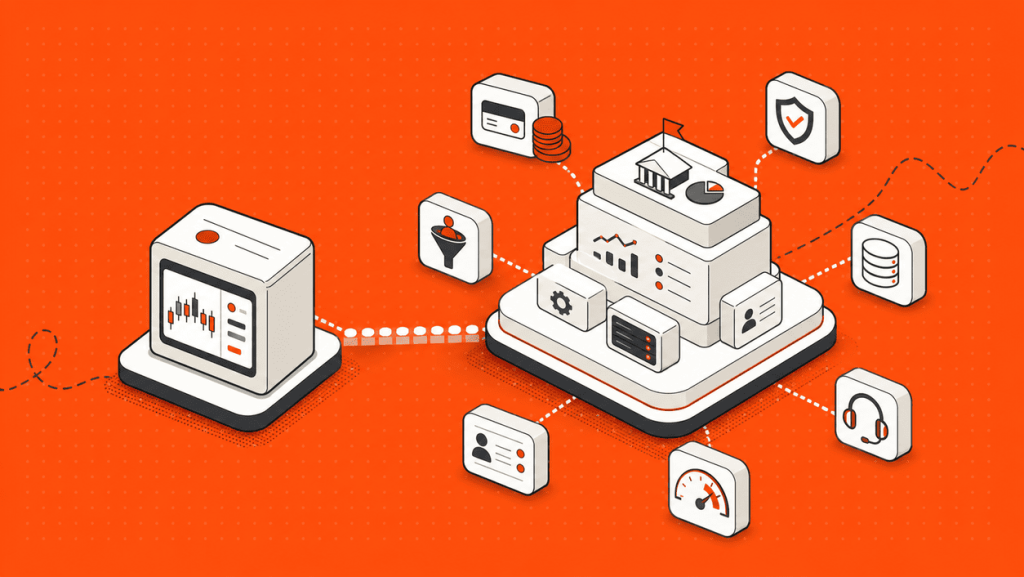
A localized brokerage isn’t a global brand translated into several languages. It’s a focused trading product built for one specific market. Everything is designed around how people in that region trade, pay, communicate, and decide who they trust.
For affiliates, this shift is more than a branding exercise. It changes conversion behavior, stabilizes revenue over time, and turns traffic into a long-term business asset.
Why Generic Brokers Stop Working in Emerging Markets
On paper, the setup often looks fine.
You find demand in Vietnam, Brazil, Nigeria, or Thailand. You launch campaigns. Traffic comes in. Registrations happen. Early metrics look promising.
Then deposits stall.
Most generic brokers are designed for Europe first. Other regions are added later, often without much depth. A translated homepage creates the illusion of localization, but the experience starts breaking down right after signup.
Sales teams usually speak only English and operate on European schedules. Payment methods feel unfamiliar or unreliable. Simple actions like depositing or withdrawing suddenly feel confusing or risky.
Trading conditions miss the mark as well. Swap-based accounts appear in Muslim-majority countries. Asset lists don’t reflect local trading habits. Leverage limits feel disconnected from what traders expect.
Each of these issues adds friction. Together, they break the funnel.
From the outside, it looks like low-quality traffic. In reality, it’s a mismatch between the user and the broker. The demand is real. The experience isn’t.
Running a localized brokerage removes that mismatch by design.
Localization Is About Fit, Not Features
Many people assume localization means adding more options. More languages. More assets. More settings.
In practice, it’s usually the opposite. Localization works by removing obstacles.
When a brokerage feels familiar, users hesitate less. They don’t second-guess deposits. They don’t abandon the process halfway through.
That comfort doesn’t come from flashy design or aggressive bonuses. It comes from alignment.
Things like:
- Language that sounds natural, not translated
- Payment methods people already use in daily life
- Support that responds in a way that feels expected
These details don’t sound dramatic. But they change behavior.
Why Trust Builds Faster When Things Feel Local
Trading always involves risk, especially for first-time users.
When a site looks global and distant, people slow down. They read more carefully. They hesitate before depositing. Some never take the final step at all.
A local brand changes that dynamic. Familiar wording. Local currency. Recognizable payment methods. Support that sounds human instead of scripted.
Conversion rates reflect that difference. The same traffic often performs very differently once the experience feels local.
You don’t need to promise more. You just need to remove doubt.
Costs Drop When You Stop Fighting Giants
Tier-1 markets are crowded for a reason. Everyone wants them.
Search results are dominated by brands with years of authority and massive budgets. Paid traffic turns into a bidding war with no real ceiling. Even strong campaigns struggle to stay profitable for long.
Local markets behave differently. Volumes are smaller, but competition is thinner. Intent is often clearer. Testing becomes affordable again.
Expert insight: Many niche brokerages grow by entering markets that global brands deliberately deprioritize. Being visible, responsive, and easy to use often matters more than having the biggest name.
Lower costs don’t mean lower value. They mean better efficiency.
Retention Improves Without Tricks
Traders rarely leave because spreads are slightly higher. They leave because things feel difficult.
Deposits fail. Withdrawals take too long. Support answers don’t make sense. Communication feels slow or impersonal.
When those issues disappear, behavior changes. Traders stay longer. They deposit again. They trade more often. Lifetime value grows naturally.
As an affiliate, you rarely benefit from that compounding effect. As the broker, you do.
Real Localization Goes Beyond Translation
Translation is easy. Localization is operational.
It affects how payments work, how support teams communicate, how trading conditions are structured, and how problems get resolved. Miss one of these, and the entire setup suffers.
This is why many operators rely on turnkey platforms instead of building from scratch. Modern white-label brokerage solutions, such as those provided through FintechFuel’s infrastructure, already include trading platforms, CRM systems, and back-office tools designed for regional customization.
The technology isn’t the hard part. The decisions around it are.
Payments Decide Everything
If users can’t move money easily, trading never starts.
Different regions rely on different rails. In Latin America, local bank systems and cash-based methods dominate. In Southeast Asia, instant transfers and regional gateways are common. In parts of Africa, mobile money is the default.
International cards often fail. Wires feel slow and risky. Users don’t want to experiment with money they worked hard to earn.
If the payment flow doesn’t match local habits, the funnel breaks at the most important step. This isn’t something you can “optimize later.” It has to work from day one.
This is why many brokers prioritize deep payment integrations through specialized broker infrastructure, rather than relying on generic processors.
Support Needs Context, Not Just Language
Speaking the language is only the baseline.
Support teams also need to understand how people communicate. Which channels they trust. How quickly they expect responses. When a call feels helpful versus intrusive.
In some markets, messaging apps outperform email entirely. In others, phone calls feel aggressive. Tone matters as much as speed.
Expert insight: Support teams located inside the target country often outperform larger outsourced teams. Cultural familiarity reduces friction in ways scripts can’t replicate.
This isn’t about headcount. It’s about relevance.
Trading Preferences Are Regional
Not all markets trade the same way.
Gold plays a major role in parts of Asia. Swap-free accounts are essential in Muslim-majority regions, a requirement rooted in principles of Islamic finance. Crypto demand spikes in countries where local currencies lose value quickly.
A localized brokerage reflects these realities instead of forcing a one-size-fits-all product onto every market.
When traders see instruments they recognize, confidence grows.
Affiliate Income vs Brokerage Ownership
Affiliates earn revenue. Owners build equity.
That difference becomes clearer over time.
In the affiliate model, you’re paid for acquisition. CPA offers deliver fast cash but no long-term upside. Revenue share sounds better, but terms change. Reporting is never fully transparent.
You’re always dependent on someone else’s system. That works early on. It scales poorly.
The difference between affiliate income and brokerage ownership becomes clearer when you look at how each model behaves over time.
| Aspect | Affiliate Income | Brokerage Ownership |
| Core role | Drive traffic and leads | Own the trading platform and clients |
| Revenue type | One-time CPA or variable rev-share | Recurring spreads, commissions, and fees |
| Revenue stability | Inconsistent, depends on traffic volume | More stable, grows with active clients |
| Upside potential | Limited by payout terms | Scales with client base and activity |
| Control over users | No control after referral | Full control over the client relationship |
| Data transparency | Partial, depends on broker reporting | Full access to trading and payment data |
| Risk exposure | Low operational risk | Higher responsibility, managed risk |
| Retention impact | Minimal benefit from long-term users | Direct benefit from long-term retention |
| Dependency | Dependent on broker terms and policies | Independent business infrastructure |
| Ability to optimize | Limited to traffic and funnels | Can optimize product, pricing, and support |
| Asset value | No sellable asset | Sellable, expandable business |
| Long-term value | Cash flow only | Equity + cash flow |
Why the Broker Model Compounds
As a broker, you own the client relationship.
Spreads and commissions stay with you. Risk management decisions are yours. Data is visible. There’s no guesswork about performance.
Even small differences add up. Earning a few extra dollars per lot doesn’t sound dramatic until you apply it across hundreds or thousands of active traders.
More importantly, the business doesn’t reset every month. It compounds.
Building Something That Can Be Sold
Affiliate setups stop earning the moment traffic stops.
A brokerage with active clients, recurring revenue, and a clear market focus becomes a real asset. One that can be sold, merged, or expanded.
That changes how you think about growth. Short-term ROI matters less. Long-term durability matters more.
The Technology Side Isn’t the Hard Part
You don’t need to code. You don’t need to build infrastructure from scratch.
White-label platforms already cover:
- Trading software
- CRM and back office
- Liquidity connections
- Risk management tools
The challenge isn’t technical. It’s choosing partners that already support your target market instead of promising custom fixes later.
Payment coverage and CRM quality usually matter more than brand names.
Why Affiliates Have an Edge
Affiliates already understand demand.
You know which geos click. You know which ones underperform with generic brokers. You’ve seen patterns repeat across campaigns.
That data shortens the learning curve.
Instead of guessing where to launch, you start with evidence. Instead of hunting for clients, you redirect traffic you already control.
This isn’t starting from zero. It’s upgrading the model.
Reusing What You’ve Built
Traffic sources don’t disappear overnight. Content doesn’t lose value instantly.
Campaigns can be redirected. Reviews can be updated. Email lists can be reactivated with a better offer. You control the message instead of promoting someone else’s brand.
That alone often justifies the shift.
How to Approach the Launch
The process works best when it stays focused.
Start with one market. One language. One payment setup. Don’t overbuild early.
Look at your data. Identify where interest exists but conversions lag. That gap often points to poor localization, not weak demand.
Choose partners who already operate in that region. Build local support early, even if the team is small. Everything else can follow.
Costs, Timing, and Expectations
Launching a localized brokerage doesn’t require massive capital.
Modern setups often fall between $17,500 and $90,000 upfront, plus monthly fees. Costs vary based on platform choice, payment coverage, and support structure.
Licensing can come later. Many brokers validate demand first, then pursue regulation to improve banking access and credibility.
With a turnkey setup, going live in four to six weeks is realistic.
Final Thoughts
Generic traffic is no longer forgiving.
Margins are thinner. Competition is stronger. Mistakes cost more.
Localization isn’t a shortcut. It’s a shift in strategy.
For affiliates willing to focus on one market and build something real, the upside is clear. Better conversions. Lower costs. Longer client lifetimes.
And most importantly, ownership.If you already understand traffic, the next step isn’t more volume.
It’s control.
FAQ
91

Written by Ivan Bogatyrev
Business Development at FintechFuel
Writing about the exciting worlds of iGaming and the brokerage business, breaking down the latest trends and insights. Making complex topics easy to understand, helping readers stay informed and ahead of the curve.
More by authorRead more
Brokerage Business
15 minutes read
Sep 3, 2026
A brokerage can spend heavily on traffic and still lose clients at the last step. The trader registers, passes most of onboarding, chooses an amount to deposit, then sees a payment method they do not use or do not trust. They leave.