Brokerage Business
12 minutes read
Nov 4, 2026
MT4 and MT5 Alternatives for Brokers: How to Choose a Trading Platform
If you are starting a brokerage, MT5 is a serious trading platform. But choosing a trading platform is not the same as choosing how to run the brokerage. Your clients still need to register, pass checks, fund an account, place trades, get help, and withdraw. Your team needs to see what happened at each step.
That is why a full white label brokerage solution can be a better choice than assembling a MetaTrader-based setup. The FintechFuel White Label Broker Solution supplies a branded trading experience together with CRM, back office, payment integrations, KYC tools, affiliate management, and dealing and risk functions. The case for it is not that MT4 or MT5 cannot execute trades. It is that a new broker may prefer one connected operating environment over a platform plus a long list of separate systems and integrations.
There is an exception. If your audience already trades through MetaTrader and depends on Expert Advisors, custom indicators, or the MQL ecosystem, MT5 deserves a place on your shortlist. Do not throw away an established workflow just to get a different-looking app.
Start With the Business You Are Launching
A founder often asks, “What can replace MT4 or MT5?” I would ask one question first: replace it for whom?
- For an experienced algorithmic trader: strategy code, backtesting, order types, and execution conditions may matter more than the appearance of the account area.
- For a first-time retail client: a clear mobile sign-up, understandable funding flow, visible position status, and a dependable withdrawal process may matter more than dozens of chart tools.
- For a brokerage operator: the difficult part is often joining trading activity to KYC, payments, sales, risk, support, and reporting.
All three people can work inside the same brokerage, but they are judging different jobs. A platform can be excellent for the first person and still leave the founder with a complicated launch. That is the distinction behind the broader question of buying software versus launching a brokerage.
What MT4 and MT5 Actually Give a Broker
It would be inaccurate to call MetaTrader “just a charting interface.” MT4 and MT5 have trading servers, account administration, manager tools, and integration points. MT5 also supports web and mobile trading, algorithmic strategies, routing and analytics, automation, and payment features. MetaQuotes describes many of these in its broker platform documentation.
MT4 is a different purchase decision today. At the time of writing, MetaQuotes says new MT4 platform licenses are no longer available for purchase and directs new broker buyers toward MT5. An existing MT4 brokerage may still have a working setup and loyal users; a founder starting from zero should not plan around buying a new MT4 license without confirming an actual route to market.
MT5 is stronger than the old shorthand of “terminal plus plugins.” MetaQuotes now documents CRM-related workflows and payments inside MT5. Its own brokerage-launch guidance still treats CRM, payment providers, liquidity, marketing, and legal setup as decisions a broker must make. In other words, the technology has grown, but the business is not automatically assembled for you.
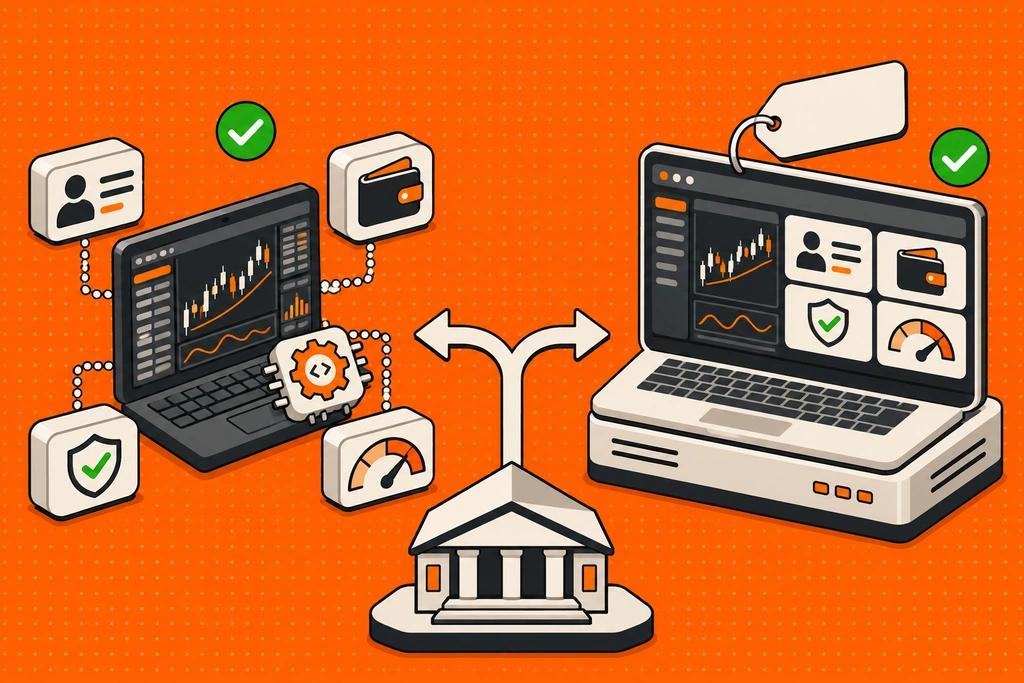
The real comparison is between two implementation models:
- MetaTrader-led stack: start with a familiar trading ecosystem, then choose and connect the other tools and partners you need.
- Integrated white label stack: start with a branded trading product and a set of connected brokerage operations, then configure the parts relevant to your market.
Either model can work. The better one depends on your clients, internal team, control requirements, and how much integration work you want to own.
Where New Brokers Feel the Difference
Imagine a client who reaches your site from a trading academy. She registers on her phone, uploads an ID, tries to deposit, gets a card decline, switches payment method, and makes a first trade the next day. A week later, she asks support why a withdrawal is pending.
From her point of view, this is one account and one relationship. Behind the scenes, it crosses acquisition tracking, KYC, payments, trading, support, and finance. If each system has a different status, your team may call her about a deposit she already attempted or tell her a withdrawal is complete when it is still in review.
A MetaTrader-based brokerage can connect those systems. The question is who designs the connections, maintains them, and investigates a broken handoff. MT5’s own integrations can reduce some of that work, so do not assume every MT5 deployment needs the same number of add-ons. Still, the founder should map the whole client journey rather than judging a platform by its order ticket alone.
Trace one failure through the whole stack
Ask each vendor to show the same client event from the screen to the team that owns the answer.
The useful answer is one traceable status, not four unrelated screenshots.
An integrated white label approach is attractive when you want one vendor accountable for more of that flow. FintechFuel describes its CRM and back office as covering sales workflows, reporting, client communications, affiliates, billing, KYC integrations, and dealing and antifraud services. That is a materially wider scope than choosing a trading terminal, even though the broker remains responsible for its own regulated operations.
MT4/MT5 vs a FintechFuel White Label: What You Are Really Comparing
The table is a buying framework, not a claim that every MT5 installation or every FintechFuel package has identical features. Ask for the exact scope in writing.
| Question | MetaTrader-led setup | FintechFuel white label approach |
|---|---|---|
| Trading experience | Established MT4/MT5 terminals with familiar tools for many active traders. MT5 has web and mobile clients. | A separate, branded trader experience across web and mobile; PWA availability should be confirmed for the package. |
| Brand and interface control | Broker configuration and connected branded portals are possible, but the standard terminal experience remains recognizably MetaTrader. | Branding and UI configuration are part of the white label offer. Confirm which screens, flows, and app assets can actually change. |
| CRM and support | MT5 has management and automation tools and can connect to a full CRM; the scope depends on the stack assembled. | Broker-focused sales, communication, reporting, ticketing, and affiliate modules are presented as part of the connected back office. |
| Payments and KYC | MT5 has payment capabilities and integration options. Regional methods, merchant approval, KYC provider choice, and the operating workflow still need review. | Payment and KYC integrations are offered within the broader solution. Availability and approval still vary by market and provider. |
| Dealing and risk | Powerful trading administration and risk functionality; define who configures and monitors it. | Dealing, antifraud, and risk services are included in FintechFuel’s published solution scope; define the provider’s role and your team’s role in the contract. |
| Who owns the integration work? | Your team, implementation partner, or vendor network must make the chosen components work together. | More components come from one provider, but custom requests and third-party dependencies can still create integration work. |
| Automation ecosystem | MT5’s MQL5 strategy and indicator ecosystem is a strong reason for some brokers to stay. | Check API access and supported trading tools. Do not assume an MT5 Expert Advisor will run unchanged on another platform. |
If you are a new broker with a small operating team, the most important row may be the one about ownership. A list of supported integrations is not the same as a working process when a payment fails, an order is rejected, or a client asks for help.
What a Modern Trader Interface Should Change
There is a fair criticism of conventional trading terminals: a new user can find them dense. That is not a universal verdict on MT5. Many experienced traders like its layout precisely because they know where everything is. But if your audience is coming from an academy, content community, or mobile-first app, you should test whether that familiarity exists in your market.
Ask five people who resemble your intended clients to complete ordinary tasks without coaching: find an instrument, understand the order size, see likely margin use, place a demo trade, and find the route to deposit or withdraw. Watch where they stop. Do the same test in the proposed FintechFuel interface.
Do not ask only which screen looks newer. A nicer chart will not fix a confusing order confirmation. A cleaner account area will not compensate for a rejected deposit that gives no reason. The useful UX measure is whether someone can move from intent to a correctly understood action without a support call.
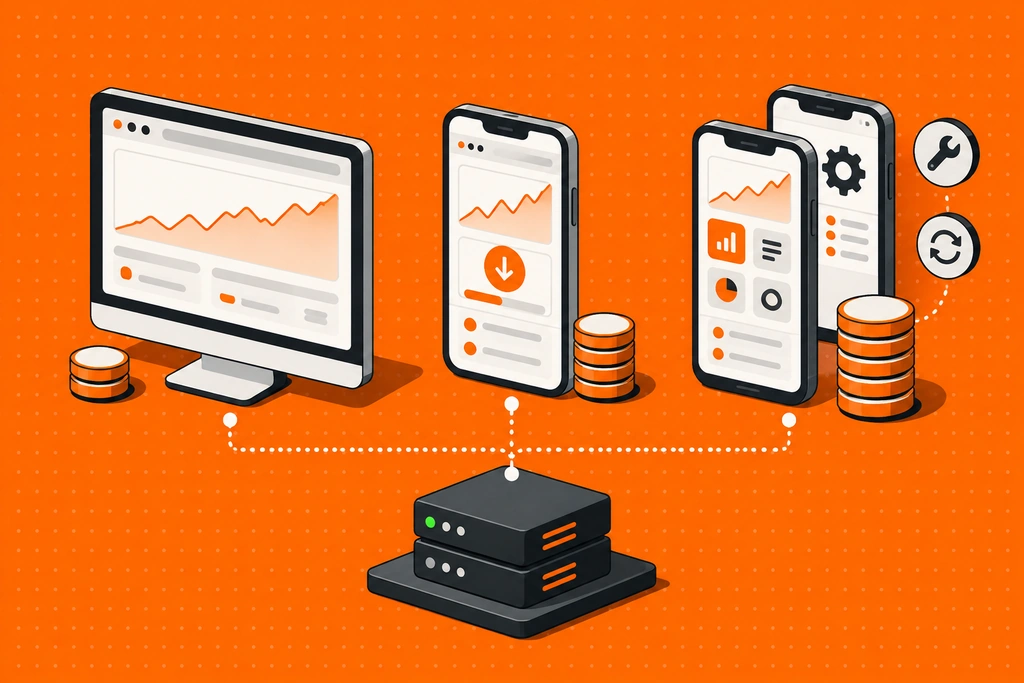
FintechFuel’s advantage for a consumer-facing launch is the ability to present trading and account tasks as one branded product. Its published white label scope includes browser and iOS/Android access, with a PWA available on request. Those channels have different release and maintenance demands, which matter more than a screenshot; the web, mobile, and PWA cost comparison helps frame the decision.
Why the Back Office Matters More Than It Looks in a Demo
Founders understandably begin with the trader view. I would spend at least as long in the operator view. Open one test client’s record and ask the vendor to show the lead source, KYC state, deposit attempts, trading account, recent activity, support history, and any risk restrictions. Now ask which team can see each field and which team can change it.
If the answer requires five logins and a spreadsheet, the brokerage will pay for that fragmentation every day. A useful brokerage CRM is not just a contact list. It should help sales, payments, compliance, support, and management agree on what happened to a client and what should happen next.
The same applies to payments. A trader who cannot use a familiar local method may never reach the platform’s best features. Even a good integrated stack needs approval rates and failed-payment reasons by country, method, and provider. That is why local payment methods belong in the platform decision, not in a separate discussion after launch.
When MT5 May Be the Better Choice
I would not recommend a new interface to every broker. MT5 may be the more sensible core when your business already has a large MetaTrader user base, your traders use Expert Advisors and MQL5 tools, or your team has the technical capacity to build and maintain the surrounding stack. Familiarity can reduce switching friction for those clients, even if the interface feels less inviting to someone new to trading.
It may also make sense when you need a very specific execution, exchange, or automation workflow that a white label package cannot support on acceptable terms. Make the vendor show the exact use case, not a generic instrument list. A feature you cannot configure, audit, or support is not available to your business in practice.
A dual-platform strategy is possible, but it has a cost. Two trader experiences can mean two sets of account journeys, documentation, training, reconciliation, and support answers. Before offering both, identify which client segment truly needs each one.
Two platforms make one answer harder
Offering a second trader experience adds another record to reconcile, even if both carry the same brand.
Positions, statements, and support answers must agree across both records.
Before offering both, decide who owns the reconciliation when the records disagree.
What to Check Before Choosing FintechFuel
An integrated offer is not a reason to skip due diligence. Ask for a demo built around your target country, instruments, and client type. Then get the scope written into the proposal:
- Client channels: Which web, iOS, Android, desktop, and PWA versions are included? Who owns app-store accounts and release submissions?
- Branding: Which colors, assets, content, navigation, and flows can your team change? Which changes require vendor development?
- Payments: Which methods and PSPs are available in your target region? Who handles merchant approval, reserves, reconciliation, and failed deposits?
- KYC and compliance: Which providers are integrated? Who sets policy, reviews exceptions, handles complaints, and remains the regulated entity?
- Execution and risk: Who configures symbols, spreads, limits, dealing rules, and incident responses? What can your team see in an audit trail?
- Data and exit: Which client and trading records can you export if you change providers? In what format and on what schedule?
- Support: What does FintechFuel support for the broker, and what trader-facing support must your own team staff?
The word “turnkey” should mean less assembly, not no accountability. FintechFuel can supply much of the technology and operational tooling. It cannot make your licensing, merchant approval, client-support obligations, or market strategy disappear. The exact division of work belongs in the contract.
Run the Same Demo on Both Options
Do not compare a polished MT5 trading screen with a FintechFuel sales deck, or the other way around. Give both vendors the same script.
- Register a test client from a trackable campaign or affiliate link.
- Submit a KYC document that fails, then correct it.
- Attempt a deposit that fails, then use a second eligible method.
- Place a trade and inspect order status, fees, margin, and execution history.
- Open a support ticket about that trade and see what the agent can verify.
- Request a withdrawal and follow the approval and client-notification trail.
- Pull a report showing the client’s source, funding, activity, and service history.
That sequence exposes the integrations behind the screens. If one product requires a partner for part of the flow, include the partner in the demo. Ask who investigates an incident that crosses systems. “The API supports it” is not the same answer as “Here is the working flow, its owner, and its logs.”
If You Already Run MT4 or MT5, Treat Migration as a Separate Project
Replacing a live platform is not the same job as choosing one for a new brokerage. Start by counting clients who rely on MT4 or MT5-specific tools. An Expert Advisor written for MQL does not become portable because a new platform has an API. Strategy behavior, historical data, order types, and execution conditions all need testing.
Then plan for accounts, statements, open positions, mobile access, client communications, and support. You may need a period when both systems run. That costs money, but a rushed cutover can cost more in disputes and lost trust. Get a migration plan for each client segment before promising an end date.
How to Compare Cost Without Comparing the Wrong Quotes
A platform license or monthly white label fee is only one line. Ask for a 12-month view with the same scope on both sides: setup, hosting, branding, CRM, KYC, payment integrations, liquidity connectivity, risk tools, app releases, support, custom work, and the internal people needed to run it.
For a MetaTrader-led setup, include the cost of the surrounding systems and the team or partner joining them. For FintechFuel, ask what the package includes, what is optional, and what happens when you enter a new country or request a different client flow. Neither route is automatically cheaper. The one that costs less in month one may require more coordination by month six.
Here is the decision rule I would use: choose the stack that gives your target clients a usable journey and gives your team clear ownership of every important event, at a cost you can sustain after launch. Count operational work, not just software invoices.
Bottom Line
MT5 remains a capable choice for brokers whose clients value its trading and automation ecosystem and whose team can own the rest of the stack. MT4 still has an installed base, but a new direct MT4 license is no longer the obvious starting point.
For a founder building a new, branded brokerage, FintechFuel is often the more complete starting point. You get a modern trader-facing product and connected tools for sales, CRM, payments, KYC, affiliates, support, and dealing in one white label environment. That reduces the number of pieces you must assemble before you can operate. The advantage is not that the broker has no work left. It is that the work starts from a connected system rather than from a terminal and an integration plan.
FAQ
6

Written by Ivan Bogatyrev
Business Development at FintechFuel
Writing about the exciting worlds of iGaming and the brokerage business, breaking down the latest trends and insights. Making complex topics easy to understand, helping readers stay informed and ahead of the curve.
More by authorRead more

Brokerage Business
11 minutes read
Oct 20, 2026
Compare the launch and ongoing costs of web, PWA, and mobile trading platforms. See what each channel needs, how to budget for year one, and when all three make sense.